
How to Balance School Pressure, Screen Time, and Physical Activity in Your Child's Routine


You've probably experienced this scenario: your child spends the day at school, comes home with homework to complete, and then wants to grab a phone, turn on a video game, or watch another episode of their favorite show.
With screens becoming an increasingly common part of everyday life, finding a healthy balance can feel nearly impossible. Many parents find themselves asking questions like: Can too much screen time affect my child's well-being? How can I encourage healthier habits without compromising academic performance?
But the good news is that, according to the CDC (Centers for Disease Control and Prevention), physically active children tend to demonstrate better concentration, greater classroom engagement, and even stronger academic performance. In addition, regular physical activity has been linked to lower stress levels and the development of important life skills, such as discipline, organization, and self-confidence.
The key is to create a balanced routine that allows children to learn, stay active, rest, and have fun while keeping up with their daily responsibilities.
Why are kids more overwhelmed than ever?
Today's children are growing up in a very different environment from previous generations. In addition to their school responsibilities, they are constantly surrounded by notifications, social media, videos, online games, and an almost endless stream of content available across digital platforms.
At the same time, the pressure to perform well academically continues to grow. Many students spend a large portion of their day attending classes, completing assignments, preparing for tests, and participating in extracurricular activities, leaving less and less time to play, stay active, or simply relax.
This reality can have a significant impact on children's physical health, mental well-being, and emotional development. According to the American Academy of Pediatrics (AAP), excessive screen use has been associated with increased sedentary behavior, sleep problems, and attention-related challenges among children and adolescents.
As a result, finding a healthy balance between school, leisure, technology, and physical activity has become one of the most important challenges for modern families.
How to encourage children to be more active outside of school

Convincing a child to trade video games, smartphones, or television for physical activity is not always easy. In most cases, however, the solution is not to eliminate screen time altogether, but to provide alternatives that are just as engaging and enjoyable.
One of the most effective strategies is to allow children to explore different activities until they find one they genuinely enjoy. Not every child is interested in the same sports or hobbies, and discovering what sparks their interest can make a significant difference in building long-term healthy habits.
After-school activities can also play an important role in this process. In addition to keeping children active after the school day ends, they provide opportunities to develop new skills, build friendships, and gain confidence in a positive and supportive environment.
Ultimately, the goal is not simply to encourage more movement, but to help children discover activities they genuinely look forward to participating in.
How after-school activities support healthy development
After-school activities offer much more than a way to keep children busy once the school day ends. When thoughtfully structured, they support a child's overall development, contributing to their physical, emotional, social, and even academic growth.
From a physical standpoint, regularly participating in sports and recreational activities helps children develop coordination, endurance, strength, and healthy habits that can benefit them throughout their lives. At a time when many children spend hours in front of screens, opportunities for movement are more important than ever.
The benefits extend beyond physical health. Group activities help children build important social skills, including communication, cooperation, empathy, and teamwork. By interacting with teammates, coaches, and peers, they learn how to navigate challenges, respect differences, and develop positive relationships.
Emotionally, after-school activities can serve as a valuable outlet for the stress children accumulate throughout the day. Participating in a sport, learning a new skill, or simply having fun in a positive environment can help boost self-confidence and self-esteem.
In addition, physically active children often demonstrate stronger concentration, greater self-discipline, and better time-management skills. These qualities can have a positive impact on academic performance, helping students balance their responsibilities both inside and outside the classroom.
Sports vs. homework: how to help your child balance both

One of the most common concerns parents have is whether participating in sports might interfere with academic performance. After all, between classes, homework, and other responsibilities, it can seem difficult to find enough time for everything.
In reality, the opposite is often true. When children have a well-structured routine, sports and academics can work together. With dedicated time for studying, training, and rest, they learn from an early age how to manage their responsibilities and prioritize effectively.
Physical activity can also help improve concentration and reduce the mental fatigue that builds up after hours of studying. Rather than serving as a distraction, sports often provide a healthy break that allows children to return to their schoolwork feeling more energized and focused.
Of course, this does not mean every hour of the day needs to be scheduled. The goal is not to fill every moment with activities, but to create a balanced routine that allows children to meet their academic responsibilities while still making time for movement, fun, and social interaction.
Balancing Academics and Sports: A Quick Overview
Topic | Key Benefits & Insights | How it Helps the Child |
The Relationship | • Not competing priorities, but complementary. • School drives academic growth; sports build life skills. | Creates a well-rounded development routine. |
Time Management | • A well-structured routine teaches prioritization. • It's not about scheduling every minute, but finding balance. | Teaches discipline and how to manage responsibilities early on. |
Academic Boost | • Physical activity improves concentration. • Acts as a healthy break from hours of studying. | Reduces mental fatigue so they return to schoolwork energized. |
Stress Relief | • Releases "feel-good" chemicals in the body. • Shifts focus to the present moment (the ball, the court). | Reduces anxiety, lowers academic pressure, and improves mood. |
Social & Emotional | • Encourages communication, collaboration, and teamwork. • Built-in opportunities to face challenges and celebrate wins. | Builds self-confidence, develops social skills, and fosters friendships. |
The antidote to academic pressure: how volleyball helps reduce stress

Childhood and adolescence are filled with learning opportunities, but they can also bring emotional challenges. Tests, homework, academic expectations, and even social pressures are part of everyday life for many children and teens. That's why finding healthy ways to manage stress is so important.
During physical activity, the body releases chemicals associated with well-being, helping improve mood, reduce anxiety, and promote a greater sense of relaxation.
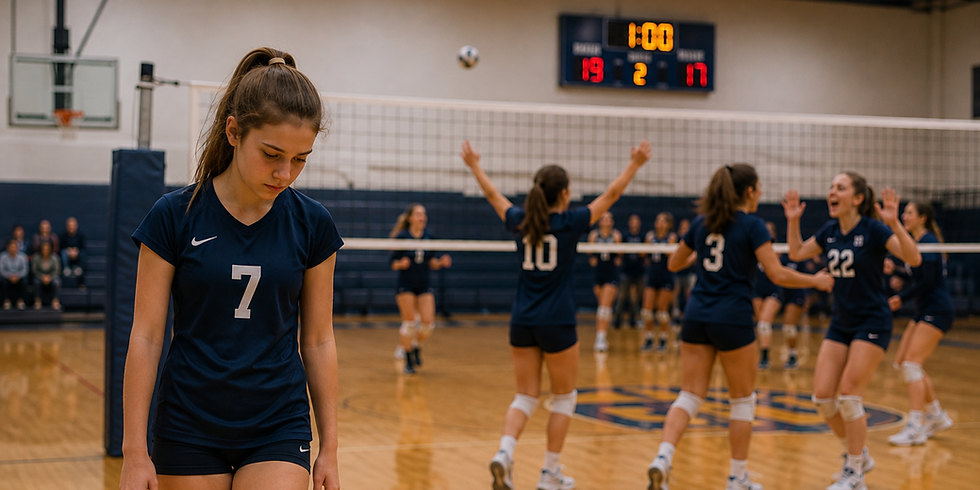
When it comes to volleyball, the benefits go beyond physical movement. As a team sport, it encourages communication, collaboration, and friendship-building. Every practice and every match creates opportunities for children to build confidence, learn how to overcome challenges, and celebrate achievements alongside their teammates.
Another unique benefit of volleyball is that it requires players to stay focused on the present moment. During a match, attention is directed toward the ball, teammates, and the next decision on the court. This shift in focus can provide an important mental break for children who spend much of their day thinking about homework, tests, and other responsibilities.
Volleyball creates an environment where children can stay active, have fun, and develop skills that will benefit them for years to come.
Rather than viewing sports and academics as competing priorities, it helps to see them as complementary parts of a healthy routine. While school supports academic growth, physical activities help children develop discipline, self-confidence, and teamwork skills.
The goal is not to eliminate screen time or fill every minute of the day with scheduled activities. Instead, it's about creating a balanced routine that allows children to learn, grow, and enjoy each stage of childhood in a healthy and active way.


Comments