
Why Our Kids Are Quitting Sports and How to Save the Game.


It is a staggering statistic that keeps youth sports directors and parents up at night: about 70% of children drop out of organized sports by the age of 13.
Parents across the DMV (DC, Maryland, and Virginia) region often ask the same questions: Why is my child losing interest in sports? How do I know if my kid is burnt out? What starts as an exciting journey into youth athletics frequently ends in frustration, stress, and a closet full of unused gear.
To understand why kids are quitting sports so quickly, we have to look past the surface and look into the sports psychology and academic research behind youth development. More importantly, we need to look at how we can fix this toxic cycle and keep our kids healthy, active, and engaged.The solution is understanding why they are leaving and introducing them to a different kind of sports culture.
The "Car Ride Home" and the Rise of Professionalized Play
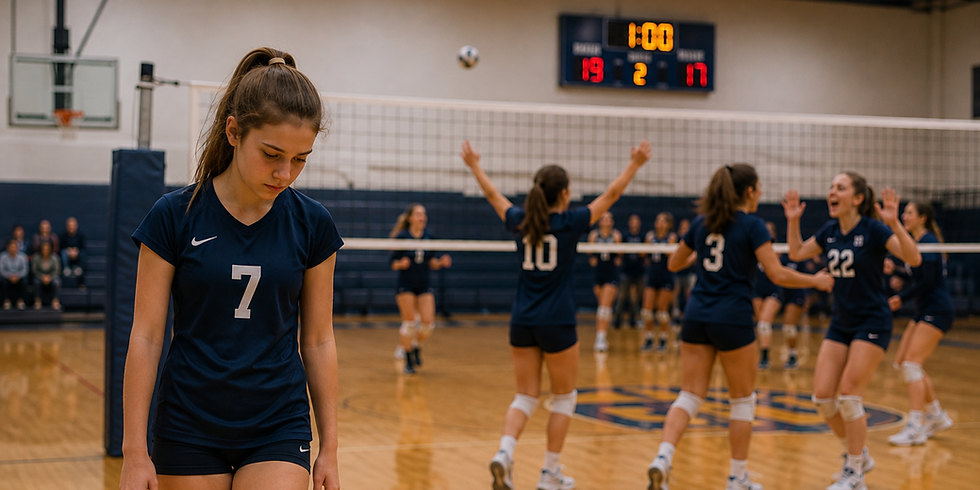
If you ask a child why they quit a sport, the academic answer usually traces back to sports psychology and Self-Determination Theory. But if you ask the child directly, they will tell you something much simpler: "It just wasn’t fun anymore."
We have accidentally turned youth sports into a high-stakes, adult-driven environment. This "adultification" of play shows up in two major ways:
Ask any sports psychologist, and they will tell you the ride home is often the most toxic part of youth athletics. Instead of letting kids decompress, it becomes an intense post-game interrogation about mistakes and scoreboards.
Families across Northern Virginia and Maryland are often told that if their 8-year-old doesn't play for an elite, year-round travel team, they will never make it. Research published in the Journal of Sports Sciences proves the exact opposite: early specialization leads to chronic overuse injuries and severe mental burnout. When a sport starts feeling like a second job with a demanding boss, kids resign.

Achievement Goal Theory: "Winning" vs. "Mastery"
In sports psychology, Achievement Goal Theory explains that children view success in two ways:
Ego/Outcome Orientation: Winning, being better than others, and avoiding mistakes.
Task/Mastery Orientation: Learning new skills, improving personal effort, and having fun.
When coaches and parents focus exclusively on the scoreboard, kids with an ego orientation become terrified of making mistakes. When the fear of failure outweighs the joy of playing, they quit.
The Loss of Autonomy and "Free Play"
According to Self-Determination Theory, human beings need autonomy to feel motivated. Modern youth sports are heavily structured, over-scheduled, and adult-driven. Children rarely get to experience the unorganized "backyard play" that builds organic love for a game.
Why Volleyball is an Anti-Burnout Sport

If your child is showing signs of sports exhaustion, you don’t have to give up on the benefits of athletics. You just need a sport that inherently fights the culture of burnout.
Volleyball is uniquely built to keep kids falling in love with movement, regardless of their age or skill level. Here is why the volleyball court offers a healthier psychological environment:
It is Inherently Collaborative (No Single Scapegoat)
In many sports, a single mistake leads to a direct turnover or a breakaway goal, putting massive psychological pressure on one child. Volleyball is different. By rule, you must rely on your teammates. A perfect spike requires a great set, which requires a clean pass. Success and failure are shared equally, which builds deep team chemistry and lowers individual anxiety.
A Natural Pathway for All Ages
Because volleyball is a non-contact sport, it allows for a beautiful, injury-free progression from early childhood through high school:
Volleyball for Kids & Toddlers (Ages 4-7): At this stage, it’s about physical literacy. We focus on tracking the ball, spatial awareness, and basic motor skills through high-energy, pressure-free games.
Youth Volleyball (Ages 8-12): This is where real mastery happens. By using lighter balls and lower nets in our Youth Developmental Leagues, kids get immediate positive reinforcement. They learn that making mistakes is just part of building the muscle memory to bump, set, and spike.
Volleyball for Teens (Ages 13-18): As academic and social pressures peak in middle and high school, our Teen Leagues and Club Programs become a safe haven. It provides elite physical conditioning and competitive outlets without sacrificing their mental health.
How We Fix Youth Sports

Reversing the dropout epidemic in the Washington DCM area requires a shift in how we, as adults, measure success.
Instead of asking your child "Did you win today?", try asking: "What was the most fun play of the game?" or "What is one thing you did better today than last week?" This simple shift moves their brain from an ego-mindset (worrying about external validation) to a mastery-mindset (focusing on personal growth).
At the Volleyball Academy, we don't coach for the short-term trophy; we coach for the long-term athlete. Our mission is to keep sports local, accessible, and deeply engaging. You don’t need to spend your entire weekend driving up and down the East Coast to give your child an elite athletic experience.
If you are looking for a community that prioritizes your child's development, check out our upcoming DMV Youth Volleyball programs. Let’s give them their game back!


Comments